
By Colin A. Young
State House News Service
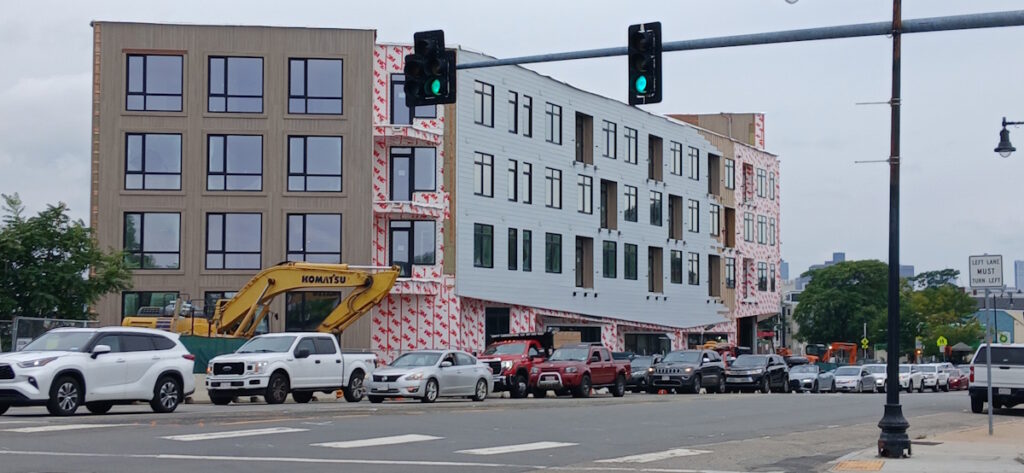
Having hit a 10-year low in 2025, housing permits in Greater Boston are rebounding in 2026, early estimates suggest, possibly helped along by laws that allow accessory dwelling units by right and require multi-family zoning near MBTA service.
Estimates through August, presented Tuesday at the release of the Boston Foundation’s 2026 Greater Boston Housing Report Card, point to “a little bit of a rebound in permitting,” said Luc Schuster, executive director of Boston Indicators. But he cautioned that the figures are “very imperfect” and rely heavily on estimates.
Even if the rebound holds, permitting remains below early-2020s levels, Schuster said.
“I think we’re at a real period of uncertainty for housing in Greater Boston. On the one hand, we really have made progress in recent years. When you look at some of the supply data, you can see more homes coming online, and that really does, to me, seem like it’s helping lead to some of the moderation in prices we saw in the last year. Obviously, a lot more to do on that front,” he said. “But then this is happening at the same time that we’re facing really serious federal policy and macroeconomic headwinds. So supply up a little bit, demand may be down a little bit, but for a whole host of bad reasons. We don’t want to solve our housing affordability challenges by slipping into recession or losing significant numbers of residents.”
Last year, the Boston metro region permitted just more than half as many units as in the late 2010s, and it ranks last among the country’s 11 largest metro areas at about two units per 1,000 residents. Schuster said the 2021 MBTA Communities Act and the state’s 2024 ADU law “may well be behind” the uptick, noting that about 1,300 ADU permits have been pulled in Greater Boston in the last year and a half under the law.
Schuster said the state policy efforts to address housing challenges have “been interesting.” He noted the defeat of Question 7 which sought to allow single-family homes by right on lots of certain sizes and pointed out that the Legislature this term “is not doing a lot through standalone housing bills, but rather tacking on tactical provisions onto bigger omnibus packages that are having to move through the Legislature one way or the other.”
“There’s a set of important provisions currently being negotiated in the state’s economic development bill: legalizing duplexes statewide; ‘YIGBY,’ which would legalize more multifamily housing production on land owned by religious institutions; Tenant Opportunity to Purchase Act. So we’re kind of all waiting eagerly to see which of those make it through,” he said. “And if many of those do make it through the final law, I think this really could have ultimately been a pretty consequential year for housing policy reforms in Massachusetts.”