
The City’s report provides a roadmap for how Boston will achieve net zero emissions by 2050 and increase resilience against sea level rise and extreme weather
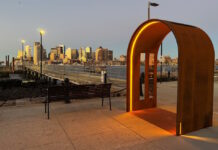
BOSTON – Monday, April 27, 2026 – Today, Mayor Michelle Wu announced the release of Boston’s landmark 2030 Climate Action Plan alongside dozens of community and institutional partners at LoPresti Park in East Boston. This implementation plan provides a roadmap for how the City will achieve its carbon emissions reduction and climate resilience goals, including reducing community-wide greenhouse gas emissions by 50 percent by 2030 and reaching carbon neutrality by 2050.
“Fighting climate change provides a generational opportunity to create good-paying jobs, more affordable energy, cleaner air, and safer streets,” said Mayor Michelle Wu. “The 2030 Climate Action Plan outlines Boston’s determination to deliver on our brightest future through citywide action. This year’s update represents a clear transition from vision to implementation, and from a focus on city government goals to citywide coordinated action. I am grateful for all the dedicated community partners whose years of collaboration set the foundation to make this plan possible.”
Boston’s 2030 Climate Action Plan marks a shift in focus from planning into the implementation phase of the City’s climate action strategy, bringing City departments, local institutions, and community partners together to ensure that Boston can thrive for generations to come. The Plan provides concrete metrics and goals across key areas of climate action, including buildings, transportation, energy, workforce development, coastal resilience, and protection from extreme weather. Climate justice is a key component of this initiative, as underserved communities will disproportionately experience the greatest impacts of climate change. The City of Boston prioritized community engagement in its environmental justice communities, designed the Plan incorporating their current and future needs, and will implement strategies to ensure that every neighborhood receives the public health, economic, and resilience benefits of climate action.
Highlights of the Plan include:
- Reducing greenhouse gas emissions: Boston is on track to reduce emissions by 48% by 2030 through full implementation of its existing programs and policies. The Plan builds on this trajectory, outlining additional actions needed to reach the City’s 50% by 2030 reduction target while simultaneously reducing energy costs for Boston residents and businesses.
- Protecting Boston from sea-level rise and extreme weather: New England’s regional prosperity depends on Boston’s critical infrastructure, including world-class hospitals and universities, its highway and rail network, and local food systems. The Plan includes strategies to protect these regional assets and vulnerable neighborhoods alike, outlining steps to screen City capital projects for future climate risk; protect residents from flood pathways; reduce heat-related injuries; and ensure that every Boston neighborhood has certified Community Emergency Response Teams.
- Building a green workforce: The strategies outlined in this Plan are expected to support approximately 67,000 full-time jobs annually. The City will work to strengthen training pipelines and expand access to high-quality green jobs through leveraging City procurement policies, Project Labor Agreements, and programs like PowerCorps Boston.
- Tracking Boston’s progress: The Plan includes 22 metrics that the City will track over the next five years through the Climate Action Plan Implementation Dashboard. These metrics measure progress towards the City’s goals and how residents and businesses benefit from climate action. As implementation progresses and more data becomes available, additional metrics will be incorporated over time. These metrics include monitoring:
- Buildings that meet Net Zero Carbon Zoning, Coastal Flood Resilience Overlay District, and Building Emissions Reduction and Disclosure Ordinance (BERDO) standards.
- Heat pumps installed and weatherization projects completed;
- Energy cost savings from residents and businesses enrolled in Boston Community Choice Electricity.
- Street and park tree plantings to provide cooling benefits;
- Public transit and Bluebikes ridership.
- Number of residents graduated from the City’s climate job training programs, and more.
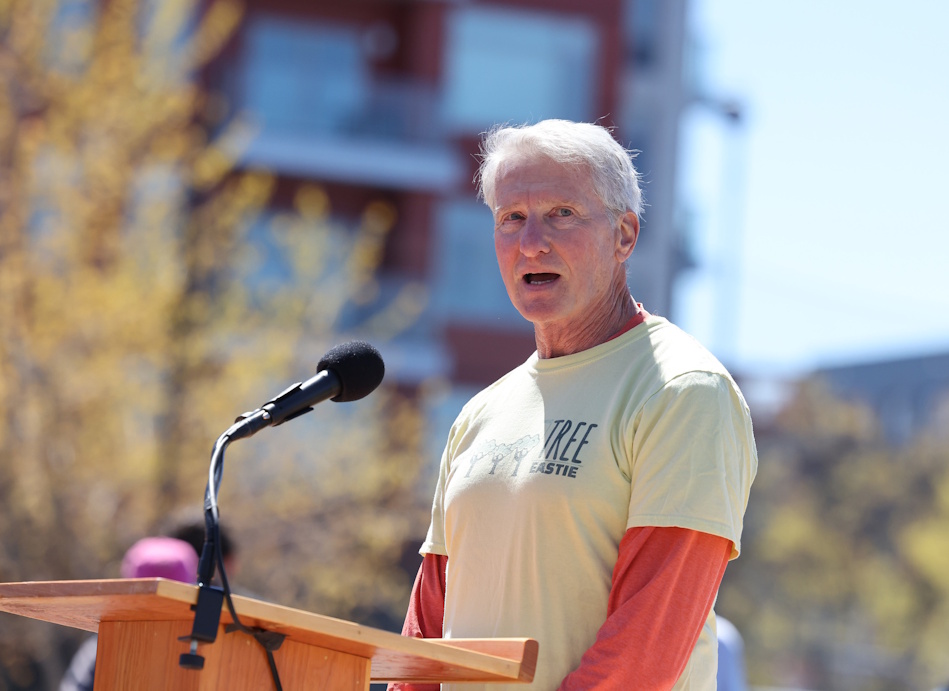
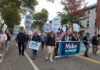
The community Climate Action Plan launch event included remarks from Mayor Wu, leadership from the City’s Environment, Energy, and Open Space Cabinet, and community and institutional partners. Hosted in partnership with Tree Eastie, a Climate Action Plan community partner, the gathering included a ceremonial planting of 10 trees in East Boston to improve the neighborhood’s tree canopy and local resilience to extreme heat.
“With this Plan, Boston continues its critical national and global leadership on climate change with direct benefits for all Bostonians and as a model for the rest of the country,” said Chief Climate Officer Brian Swett. “Our communities and our future generations depend on the actions we take today. That’s why we are working with our community partners to collaboratively deliver on concrete strategies, measurable targets, and actionable timelines to reduce emissions and strengthen our neighborhoods’ resilience.”
“Boston is faced with the invisible threat of severe heat and the peril of rising tides,” said Bill Masterson, Executive Director of Tree Eastie. “While there is no single solution, Boston’s Climate Action Plan converts these challenges into actionable, measurable solutions.”
Read the full Climate Action Plan here.