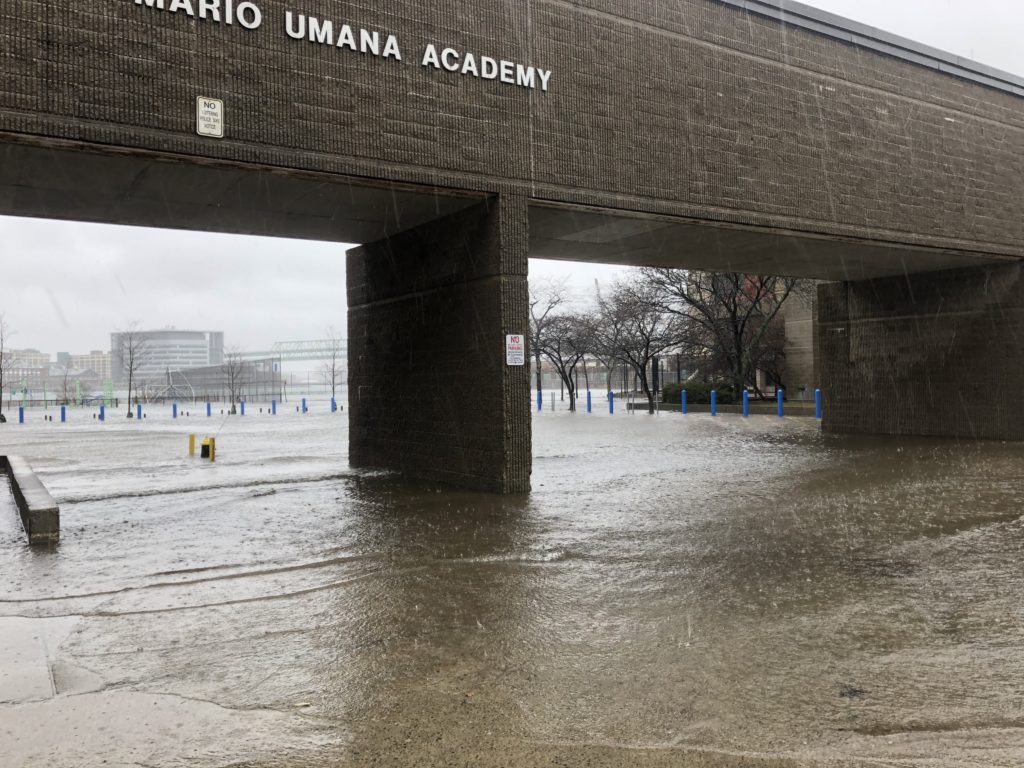

City: Coastal infrastructure projects would help protect the over 40% of Boston residents at risk of flooding and prevent over $40 billion in economic loss by end of century
Today Mayor Michelle Wu announced the release of the US Army Corps of Engineers’ (USACE) draft Boston Coastal Storm Risk Management Feasibility Study, a once-in-a-generation study to protect Boston against coastal flooding and sea level rise. This study, projected to be completed by 2028, will allow the City of Boston to access up to 65% federal cost-sharing to construct coastal resilience projects to prevent an estimated $41 billion in damages from coastal flooding.
The proposed projects outlined in the draft report are open to public comment from July 24 through September 18. Residents and stakeholders can submit their feedback and learn about upcoming community meetings and webinars at boston.gov/flood-prevention.
“Boston leads with bold action to protect our communities and our future,” said Mayor Michelle Wu. “The future of our city depends on the steps we take now to build resilient communities. With more frequent flooding in vulnerable areas during extreme weather events, the Coastal Storm Risk Management Feasibility Study is critical to understanding how to protect inland neighborhoods most at risk and unlocking resources to take action. I’m grateful for all our partners working to ensure Boston is resilient, prepared, and beautiful.”
“Today marks a major milestone in our shared mission of community resilience,” said Lieutenant Colonel David MacPhail, Deputy Commander of the New England District of the U.S. Army Corps of Engineers. “The reality is that doing nothing is not a viable option. Without action, the costs to public safety and economic vitality from coastal flooding will only be compounded.”
The project would allow Boston to receive up to 65% federal funding for construction through the USACE partnership, with the remaining costs to be covered through state, local, and private funding sources. The draft plan builds on years of Climate Ready Boston planning and neighborhood resilience studies.